🚇 Dubai 2032: Metro Expansion & Etihad Rail
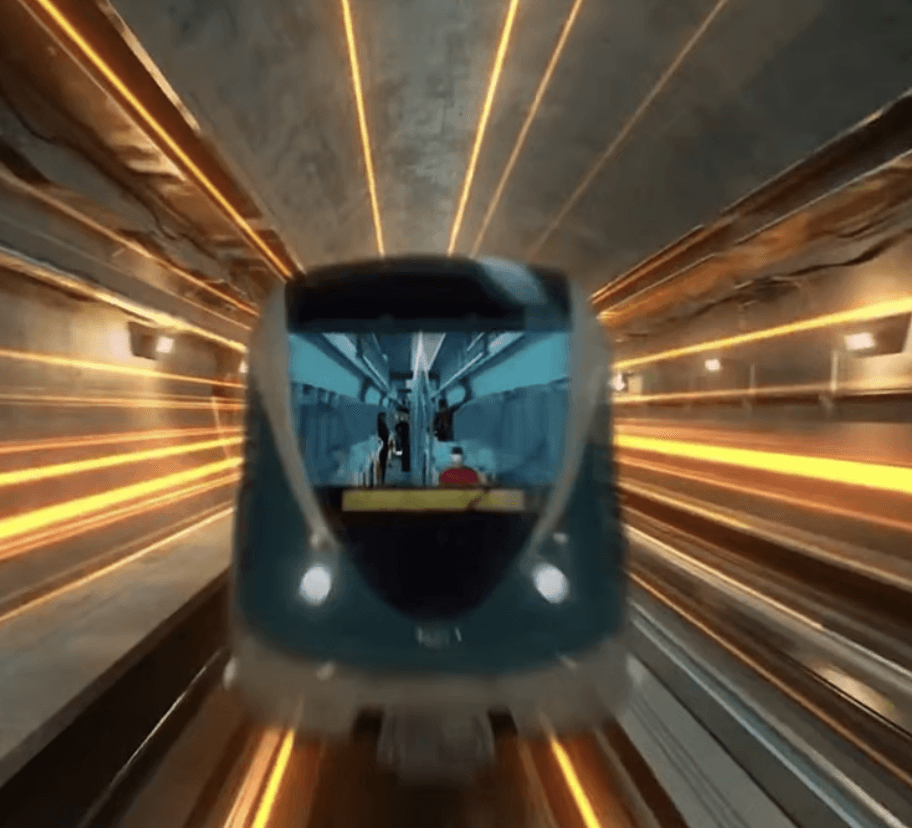
Dubai continues to prove that its growth is anything but accidental. The approved metro expansion plan through 2032, combined with the rapid progress of Etihad Rail, represents far more than transportation upgrades. It’s a strategic roadmap clearly signaling where the city is heading—and where the next investment opportunities will emerge.
Dubai’s Current Transport Backbone
Today, Dubai’s public transport system is built around three main pillars:
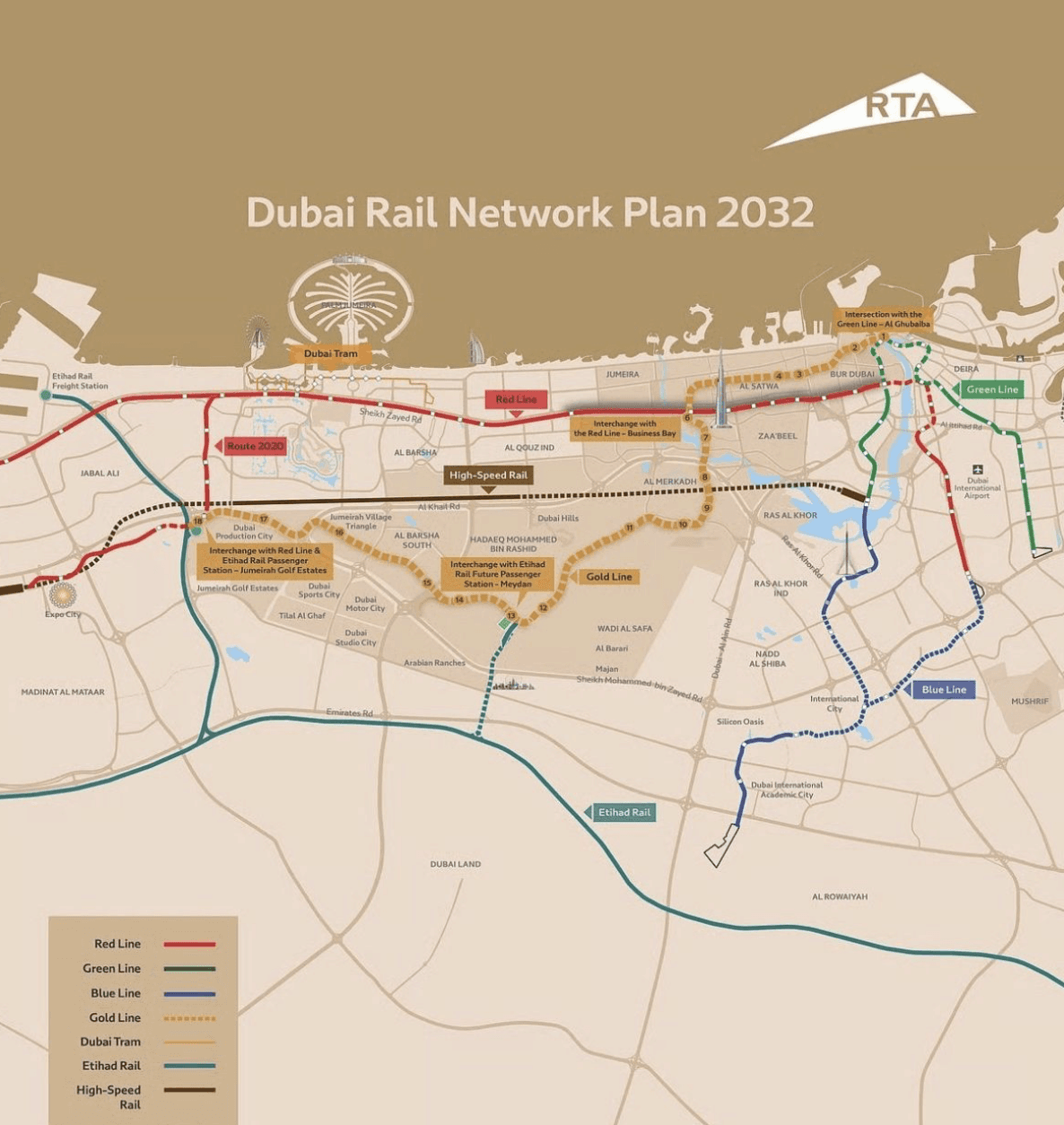
🔴 Red Line – the city’s main artery connecting Dubai Marina, Downtown, Dubai International Airport, and Deira
🟢 Green Line – serving older districts such as Deira and Bur Dubai
🚊 Dubai Tram – covering Marina and JBR
Even now, one rule consistently applies: properties located near metro stations benefit from higher demand, better liquidity, and stronger long-term value growth.
A New Era: Blue Line & Gold Line
The most significant changes are still ahead.
🔵 Blue Line – New Connections, New Potential
The upcoming Blue Line will connect fast-growing areas such as:
Mirdif
Al Warqa
Dubai Silicon Oasis
Dubai International Academic City
This corridor holds major upside potential. These areas are currently relatively affordable, but with metro access, they are expected to become some of Dubai’s most sought-after residential zones.
It will also strengthen connectivity toward Dubai Creek Harbour, an emerging urban hub set to redefine the city’s future skyline.
🟡 Gold Line – Accessibility Changes Everything
The Gold Line will directly connect communities such as:
Dubailand
Arabian Ranches
Dubai Hills Estate
with major business districts—including Business Bay and key urban corridors across the city.
But this is not just another metro extension.
The Dubai Metro Gold Line is set to become the largest transport project in Dubai’s history, with an investment of approximately AED 34 billion.
Key facts from the official announcement:
📏 42 km total length
🚉 18 stations across 15 strategic districts
🏙️ Connection to 55+ major real estate developments
👥 Designed to serve around 1.5 million residents
🚇 First fully integrated underground metro line in Dubai
📈 Expected to carry ~465,000 passengers daily by 2040
The line will run from Al Ghubaiba to Jumeirah Golf Estates and include major interchange points with existing metro lines as well as future integration with Etihad Rail.
In addition, the project is expected to generate up to 430% economic return over 20 years, reinforcing its role not just as infrastructure—but as a long-term economic growth engine.
🚄 Etihad Rail: The Ultimate Game Changer
The Etihad Rail project is set to elevate not only Dubai, but the entire UAE.
It will connect all emirates through a unified rail network
Travel time between Dubai and Abu Dhabi is expected to drop to around 50 minutes
It will fundamentally reshape how people live, work, and commute
A key component will be integration with Al Maktoum International Airport, alongside the development of multi-modal hubs combining metro, rail, and air transport.
A New Lifestyle Concept: 20-Minute City & 1-Hour Country
Dubai is moving toward two powerful urban concepts:
20-minute city – everything essential (work, services, leisure) within 20 minutes
1-hour country – seamless inter-emirate travel within one hour
These shifts will significantly reshape real estate dynamics and redefine how location value is perceived.
What This Means for Investors
Dubai’s history consistently proves one key principle:
👉 infrastructure always precedes price growth
In practice, this means:
today’s “peripheral” areas can become tomorrow’s hotspots
early investors capture the highest upside potential
connectivity drives demand—and demand drives value
Conclusion
The expansion of Dubai’s metro and the development of Etihad Rail are not just transport projects—they are clear indicators of future growth.
If you’re watching Dubai’s real estate market, infrastructure is your most reliable guide to where the next opportunities lie—and how to stay one step ahead.